Affidavit of Single Status for Foreigners Marrying in Thailand
How foreigners prove they are free to marry before registering a marriage at a Thai district office: who issues the affidavit, translation, MFA legalisation and registration.
Published 2026-06-28 · Reviewed by the legal and translation team at Thai Law & Accounting · Last reviewed 8 Oct 2026
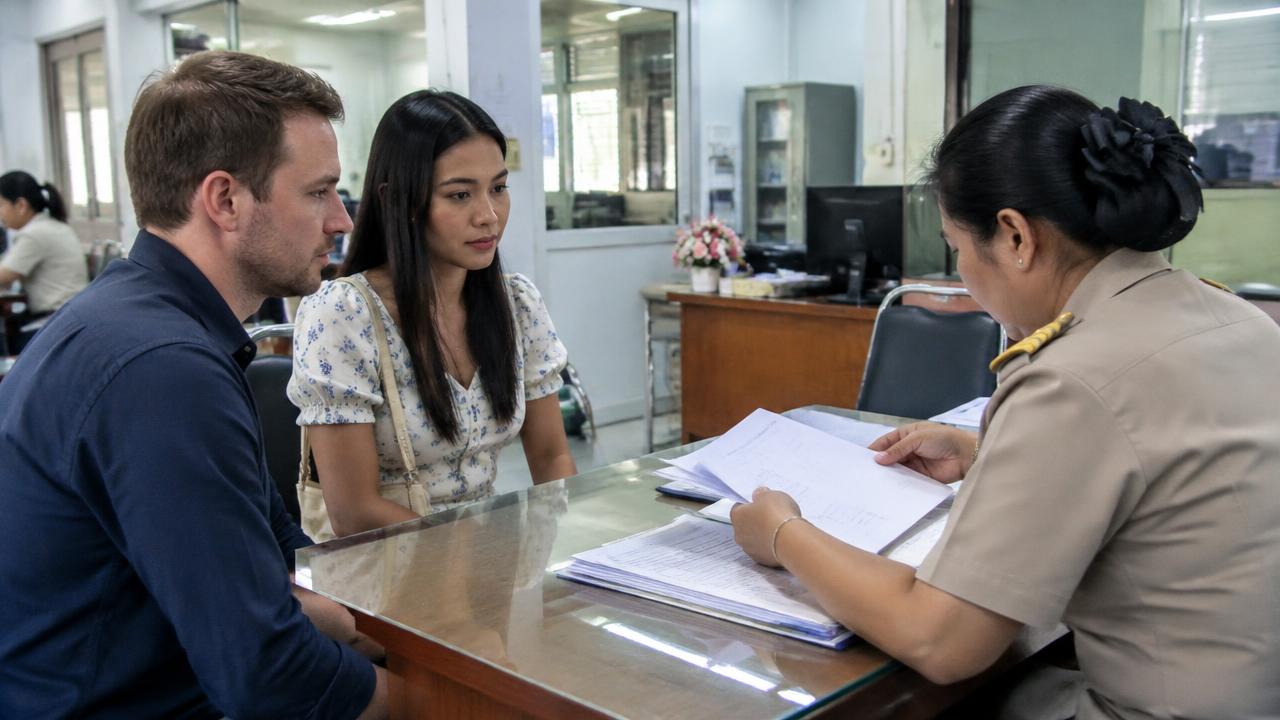
A Thai district office (amphoe or khet) will only register a marriage with a foreign national once it sees official proof that the foreigner is legally free to marry. That proof is usually called an affidavit of single status, an affirmation of freedom to marry, or a certificate of no impediment. The name changes by country; the purpose does not.
Who issues it depends on your passport
Some embassies in Bangkok issue or notarise the declaration themselves. Others no longer offer notarial services and instead ask you to swear the declaration before a local lawyer or notary, or to obtain a certificate from your home country. Check your own embassy's current consular page before booking anything — this is the step where most delays begin.
The usual sequence in Thailand
- Obtain the single-status document required by your embassy.
- Have it translated into Thai by a qualified translator.
- Submit the original and translation for legalisation at the Department of Consular Affairs (Ministry of Foreign Affairs).
- Attend the district office together with your Thai partner, passports, the legalised documents and two witnesses where requested.
Common reasons a file is returned
- Names spelled differently across passport, affidavit and translation.
- A previous divorce or a spouse's death not documented with a final decree or certificate.
- A declaration that the district office considers too old — ask the office in advance.
Frequently asked questions
Can I use the same affidavit at any district office?
Generally yes, but individual offices can ask for extra supporting documents, so it is worth calling the office you plan to use.
Do I need a Thai translation if the affidavit is in English?
Yes. Thai government offices work in Thai, so the affidavit is translated and the translation is legalised together with the original.
I was divorced before — what else do I need?
Bring the final divorce decree or certificate, usually translated and legalised in the same way, so the officer can confirm the previous marriage has ended.
Sources
- Department of Consular Affairs, Ministry of Foreign Affairs of Thailand — legalisation
- Thai Civil and Commercial Code, Book V (Family) — Office of the Council of State
- HCCH Apostille Convention — status table (Thailand: in force 28 Feb 2027)
General information, not legal advice for your specific case. Requirements change; confirm with the authority concerned.