
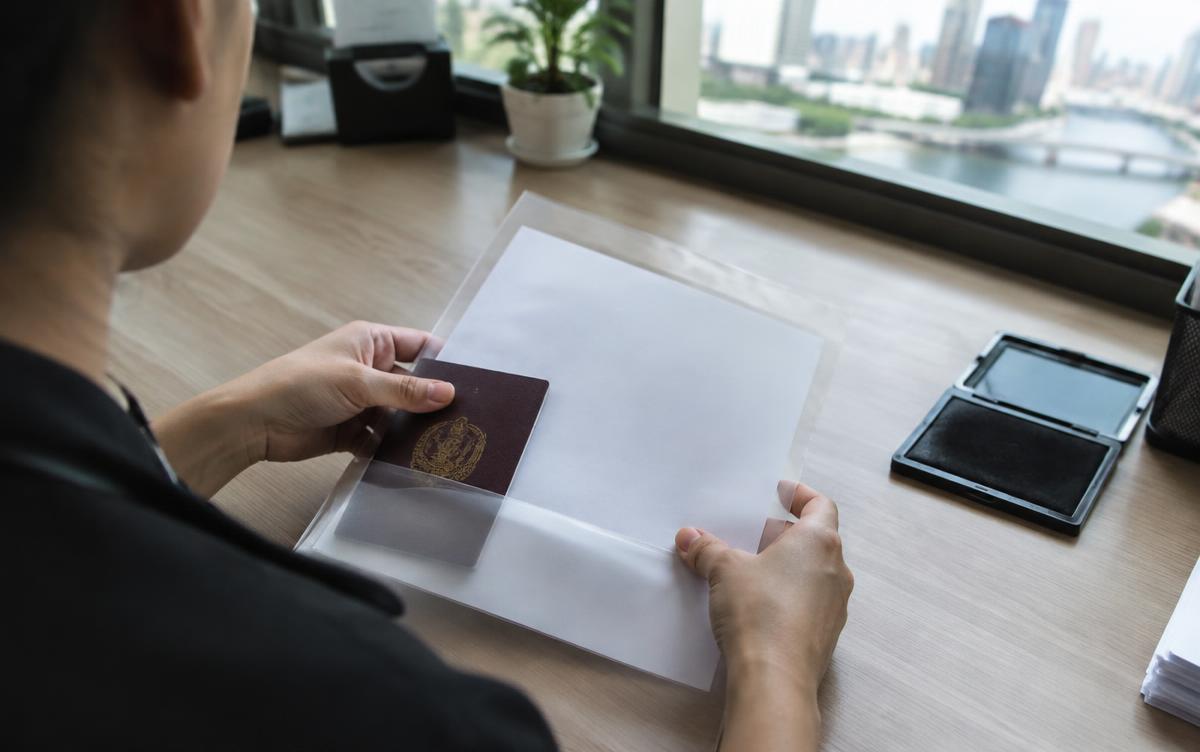
What a "fully legalised" police clearance means
A police clearance issued by the Special Branch Bureau is a Thai public document. Many foreign authorities accept it only after a chain of certifications: a translation where required, authentication of the issuing officer's signature by the Department of Consular Affairs, and further legalisation by the destination country's embassy. Some recipients ask for notarisation instead or in addition. The correct order depends on the recipient, not on one formula for every country.
The usual chain before 28 February 2027
- Apply and give fingerprints at the Special Branch Bureau's Personal Background Check Center (the applicant attends in person)
- Translate into the language the destination requires, including stamps and signatures
- Authenticate at the Legalization Division, Department of Consular Affairs
- Legalise at the destination country's embassy or consulate in Thailand, if the recipient requires it
What changes when the Apostille applies
Thailand has joined the Apostille Convention, which enters into force for Thailand on 28 February 2027. For destination countries that are parties, an Apostille replaces embassy legalisation. Non-party countries still need the consular and embassy route. Check a country's status on the HCCH status table.
Why a document set has to be restarted
- Translation and certification were done in the wrong order for the recipient
- Names in the translation do not match the passport
- The certificate became older than the recipient accepts while waiting for later steps
- The destination embassy changed its requirements or works by appointment only
What to send before requesting a quotation
Tell us the destination country and authority, the purpose (visa, employment, marriage), any written requirements you received, and a copy of the certificate if you already have it. Our staff will confirm which steps are actually needed and send a quotation. Timing depends on government and embassy queues, so we do not quote fixed timelines.
Frequently asked questions
Do I have to attend any office myself?
Fingerprinting at the Special Branch Bureau must be done by the applicant. Other certification steps can often be lodged by an authorised representative, subject to each authority's rules.
Does every country require embassy legalisation?
No. It depends on the recipient, and from 28 February 2027 Apostille parties will accept an Apostille instead.
How much does it cost?
Send your details to our staff via LINE @THAIL or call 092-0170000 for a quotation. Government fees follow each authority's published schedule.
Send your documents for our translation team to review
Call 092-0170000 · LINE @THAIL · contact@thailaw-accounting.co.th
Fees: ask our team for a quote
Sources
- Special Branch Bureau — Personal Background Check Center
- Department of Consular Affairs, Ministry of Foreign Affairs
- HCCH — Apostille Convention status table
Reviewed by the translation team at Thai Law & Accounting Services · Last reviewed 4 Oct 2026 · General information, not legal or immigration advice for your specific case