
Thai documents / use in China
Thai documents for China: ask the recipient before translating into Chinese
Work permits, marriage or company registration and university admission in China are handled by different authorities, and practice can differ by province and city. Some recipients accept only a Chinese translation made by a translation company or notary office in China, so confirm before ordering one in Thailand.
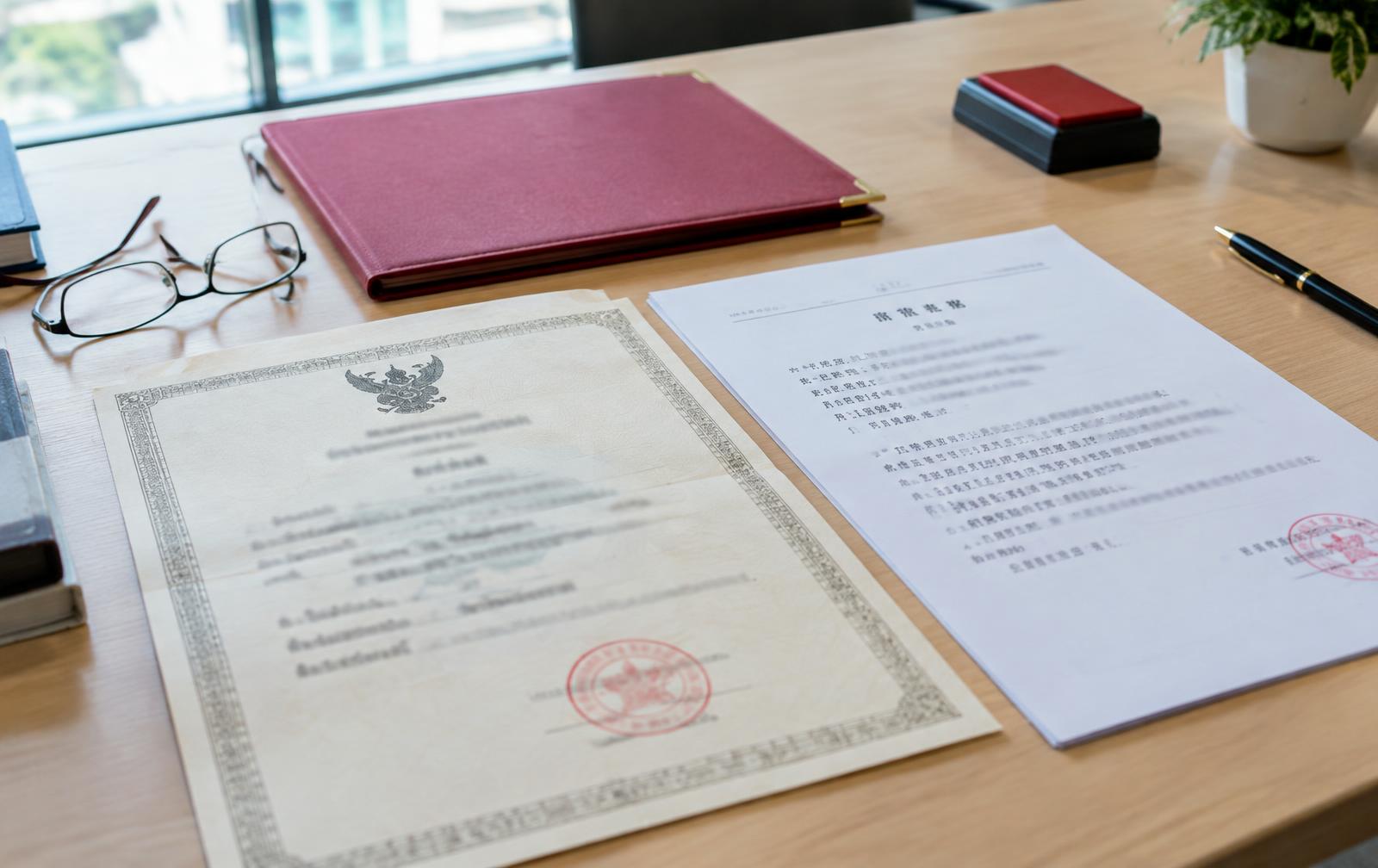
Three common cases and what to ask
Employment and residence
Employers and the local labour or exit-entry authority commonly ask for degree certificates or a police clearance. Get the list from the employer and ask whether a Thai-made translation is accepted or it must be done in China.
Marriage, company or legal matters
Registry offices, business registration authorities or banks may require status documents, company certificates or an authenticated power of attorney. Get the requirements in writing from that office.
University admission
Each university sets its own list, such as transcripts, graduation certificates or translations. Some accept copies first and check originals later; read the institution's admission notice.
Checks before ordering translation or authentication
- 01Identify the recipient, city or province and purpose.
- 02Match the English name spelling on the Thai original against the passport, and any Chinese name to be used.
- 03Ask whether the Chinese translation must be made in Thailand or in China, and whether the original must be authenticated.
- 04If authentication is required, confirm the current process with Thai Consular Affairs and the Chinese Embassy before submitting originals.
A Chinese translation is not authentication
A translation lets the recipient read the content. Legalization concerns the Thai official's signature or seal on the original. Neither guarantees acceptance; the Chinese recipient decides.
Apostille status for Thai-issued documents
China is a party to the Apostille Convention. The HCCH table records Thailand's accession on 30 June 2026, entering into force on 28 February 2027. Before that date do not order a Thai-issued Apostille; confirm the current authentication process with Thai Consular Affairs and the Chinese Embassy.
What to send for a case review
- Clear images of every page and reverse side, with unrelated data redacted
- Recipient, city or province and the written instructions or link
- Passport spelling and any Chinese name
- Number of sets and filing deadline
Fees: ask our team. Timing depends on the document and the recipient's requirements.
Official sources consulted
- HCCH — Apostille Convention status table
- กรมการกงสุล กระทรวงการต่างประเทศ — งานนิติกรณ์
- 中国领事服务网 — China consular service (MFA)
- Embassy of the People's Republic of China in Thailand
References reviewed 1 October 2026 · Requirements change; confirm with the recipient before filing · Illustration is generated; specialist review pending before search indexing