
Thai documents / use in Japan
Using Thai documents in Japan: check the recipient first
A Japanese municipal filing, residence-status application and university submission are different document requests. Identify the receiving office and application type before commissioning a Japanese translation or legalizing a Thai original.
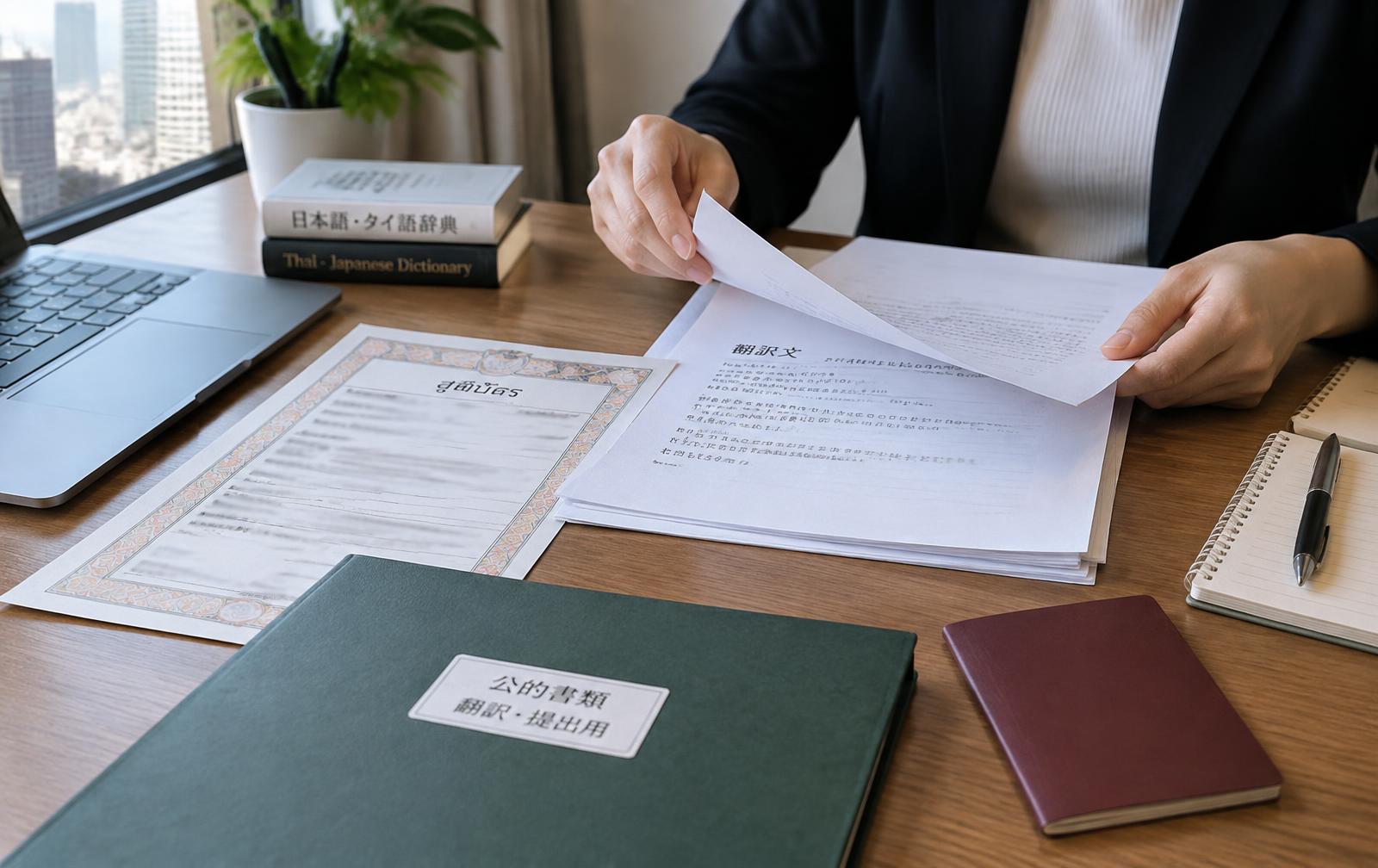
The recipient, not the destination alone, sets the requirements
Municipal registration
Ask the receiving municipal office (市区町村役場) for its current list for your filing, such as a marriage or family-register matter. Check document age, Japanese translation and any required authentication with that office. Immigration checklists are not substitutes.
Residence-status application
Review the Immigration Services Agency of Japan's instructions for the specific status sought. Evidence and translation requirements may vary by application. A translation alone does not authenticate the Thai issuing official's signature.
University or commercial use
A university or company may accept an English-issued record or require its own copy format. Obtain that recipient's written specification before paying for unnecessary layers of translation or legalization.
Four checks before submitting an original
- 01Identify the Japanese receiving office, exact filing type and its latest document list.
- 02Compare the Thai original's names and dates with the passport and name-change records; ask whether a new issuer-certified extract is required.
- 03Confirm the translation language, format, accepted translator and whether originals or copies accompany it; share the recipient's instructions with the translator.
- 04Only if authentication is requested, ask Thai Consular Affairs and the relevant Japanese authority or mission about the order of legalization and any original-document requirements.
Translation does not authenticate the original
Translation renders the Thai text for its reader. Legalization addresses official signatures or seals within the authority's remit. Neither guarantees acceptance by every Japanese office. Certification by a Thai notarial attorney is not an automatic substitute for government authentication.
Apostille status for Thai-issued documents
The HCCH status table records Thailand's accession on 30 June 2026 and entry into force on 28 February 2027. On 1 October 2026, do not order a Thai-issued Apostille as a replacement for current legalization steps. If authentication is required, verify the actual chain with the Japanese recipient, Thai Consular Affairs and the Japanese mission. Check implementation again after entry into force.
What to send for a case-specific review
- Clear images of all sides of the document, with unrelated personal information redacted for an initial inquiry
- Receiving office, city in Japan, application type and the written document instructions or link
- Passport spelling, any name-change evidence and requested number of sets
- Whether an original or issuer-certified extract is available and the recipient's filing deadline
Timing and fees: ask our team after the document and receiving authority's instructions are reviewed. No single turnaround applies to all filings.
Check current requirements with these authorities
- HCCH — Apostille Convention status table
- กรมการกงสุล กระทรวงการต่างประเทศ — งานนิติกรณ์
- Immigration Services Agency of Japan — application information
- Embassy of Japan in Thailand — consular information
References reviewed 1 October 2026 · Some Japanese government sites restrict access from certain networks, so confirm case-specific requirements directly with the recipient before filing · Illustration is generated; image rights and specialist review remain pending before search indexing